

Job Quality Indicators » International Comparisons of Job Quality
Working at a High Speed |
|||||||||||||||||||||||||||||||||||||||||||||||||||||||||||||||||||||||||||||||||||||||||||||||||||||||||||||||||||||||||||||||||||||||||||||||||||||||||||||||||||||||||||||||||||||||||||
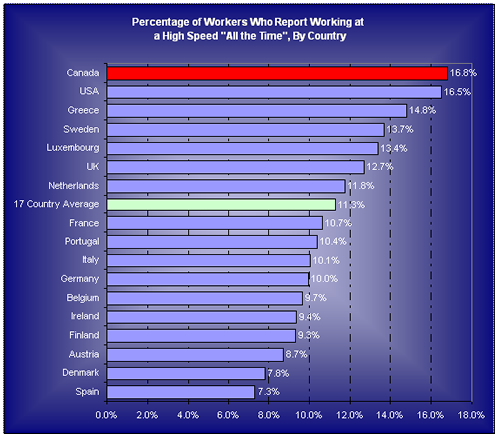
As shown in the chart below, on average, about 11 percent of workers in the 17 countries studied report working at a very high speed all of the time. The figures range from a low of 7.3 percent of workers in Spain to a high of 16.8 percent in Canada. Working continuously at high speed is particularly acute in North America with workers in Canada and the U.S. reporting working at a high speed most often. Overall workers in Canada have the highest ranking with respect to workers reporting working continuously at a high speed. |
|||||||||||||||||||||||||||||||||||||||||||||||||||||||||||||||||||||||||||||||||||||||||||||||||||||||||||||||||||||||||||||||||||||||||||||||||||||||||||||||||||||||||||||||||||||||||||
Canadian Workers Most Likely to Report |
|||||||||||||||||||||||||||||||||||||||||||||||||||||||||||||||||||||||||||||||||||||||||||||||||||||||||||||||||||||||||||||||||||||||||||||||||||||||||||||||||||||||||||||||||||||||||||
|
|||||||||||||||||||||||||||||||||||||||||||||||||||||||||||||||||||||||||||||||||||||||||||||||||||||||||||||||||||||||||||||||||||||||||||||||||||||||||||||||||||||||||||||||||||||||||||
Data for Europe from the Third European Study on Working Conditions 2000 (ESWC). Data for Canada and the U.S. from Ekos Rethinking North American Integration Survey (ERNAIS), 2002. |
|||||||||||||||||||||||||||||||||||||||||||||||||||||||||||||||||||||||||||||||||||||||||||||||||||||||||||||||||||||||||||||||||||||||||||||||||||||||||||||||||||||||||||||||||||||||||||
The evidence on the intensity of work in Canada noted above is consistent with other research on workloads in Canada. Data from CPRN – EKOS Changing Employment Relationships Survey (2000) found that almost one fifth of Canadian workers (18 percent) say they “often” or “very often” have difficulty keeping up with their workloads (See Workloads in the Job Demands Indicator). Although these data from these two studies may not be directly comparable, they do suggest that issues on the pace of work and workloads are a serious problem facing many Canadian workers. Intensification of work comes at a price. Data from Europe find that workers who report working continuously at a high speed are almost twice as likely as those who report never working at high speed to report health problems, like backache, stress, muscular pains in neck and shoulders, and injuries. Questions on health problems at work were not asked of workers in Canada or the U.S. |
|||||||||||||||||||||||||||||||||||||||||||||||||||||||||||||||||||||||||||||||||||||||||||||||||||||||||||||||||||||||||||||||||||||||||||||||||||||||||||||||||||||||||||||||||||||||||||
By Employment Status, Gender, and Age |
|||||||||||||||||||||||||||||||||||||||||||||||||||||||||||||||||||||||||||||||||||||||||||||||||||||||||||||||||||||||||||||||||||||||||||||||||||||||||||||||||||||||||||||||||||||||||||
|
|||||||||||||||||||||||||||||||||||||||||||||||||||||||||||||||||||||||||||||||||||||||||||||||||||||||||||||||||||||||||||||||||||||||||||||||||||||||||||||||||||||||||||||||||||||||||||
Data for Europe from the Third European Study on Working Conditions 2000 (ESWC). Data for Canada and the U.S. from Ekos Rethinking North American Integration Survey (ERNAIS), 2002. |
|||||||||||||||||||||||||||||||||||||||||||||||||||||||||||||||||||||||||||||||||||||||||||||||||||||||||||||||||||||||||||||||||||||||||||||||||||||||||||||||||||||||||||||||||||||||||||
Employment Status |
|||||||||||||||||||||||||||||||||||||||||||||||||||||||||||||||||||||||||||||||||||||||||||||||||||||||||||||||||||||||||||||||||||||||||||||||||||||||||||||||||||||||||||||||||||||||||||
Paid workers are slightly more likely than self-employed workers to report continuously working at a high speed. This pattern is consistent for most of the 17 countries, with the exceptions of Belgium, Denmark, Sweden and the U.K. where self-employed workers are more likely to report working continuously working at high speed. Paid workers in Canada rank first of all 17 countries studied in terms of workers reporting working at a high speed “all the time.” They are also more likely to report working continuously at high speed compared to self-employed workers in Canada (18 percent for paid employees versus 12 percent for self-employed). |
|||||||||||||||||||||||||||||||||||||||||||||||||||||||||||||||||||||||||||||||||||||||||||||||||||||||||||||||||||||||||||||||||||||||||||||||||||||||||||||||||||||||||||||||||||||||||||
Gender |
|||||||||||||||||||||||||||||||||||||||||||||||||||||||||||||||||||||||||||||||||||||||||||||||||||||||||||||||||||||||||||||||||||||||||||||||||||||||||||||||||||||||||||||||||||||||||||
On average, women report working at a high speed slightly more often than men although this was not a common pattern across countries. The largest gender gap was found in Ireland where women are more than twice as likely to report continuously working at high speed as men (14 percent of women versus 6.4 percent of men). Men in Canada are most likely to report working continuously at high speed (15.3 percent) among all men in the 17 countries. Almost 18 percent of women in Canada report working continuously at high speed. Only women in the U.S. are more likely to report high-speed work, at almost 19 percent. |
|||||||||||||||||||||||||||||||||||||||||||||||||||||||||||||||||||||||||||||||||||||||||||||||||||||||||||||||||||||||||||||||||||||||||||||||||||||||||||||||||||||||||||||||||||||||||||
Age |
|||||||||||||||||||||||||||||||||||||||||||||||||||||||||||||||||||||||||||||||||||||||||||||||||||||||||||||||||||||||||||||||||||||||||||||||||||||||||||||||||||||||||||||||||||||||||||
The incidence of working at high speed is similar for the 25-44 and 45-64 age groups but is higher for workers less than 25 years old. A similar pattern is generally observed for most countries. The fact that younger workers report working at high speed more often may be due to the nature of work done by many youth in the services sector (e.g., retail, restaurants) which is generally a fast-paced work environment. Canadian workers in the core age group (25-44) rank first in terms of working at high speed followed by the U.S. in second place. |
|||||||||||||||||||||||||||||||||||||||||||||||||||||||||||||||||||||||||||||||||||||||||||||||||||||||||||||||||||||||||||||||||||||||||||||||||||||||||||||||||||||||||||||||||||||||||||
Indicators |