

Job Quality Indicators » Gender and Job Quality
<< Back to list of all indicators
Job Quality Deficits |
||||||||||||||||||||||||||||||||||||||||||||||||||||||||||||||||||||||||||||||||||||||||||||||||||||||||||||||||||||||||||||||
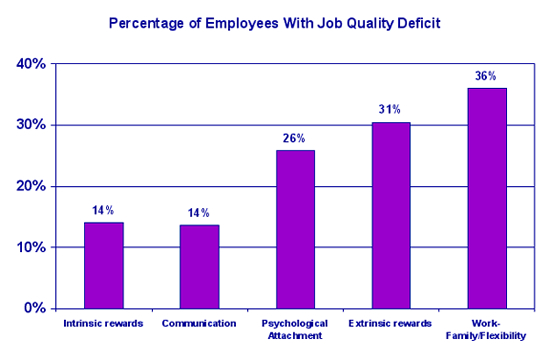
A job quality deficit exists when what workers have in their job falls short of what they value in a job. In this section, we examine those discrepancies. The methodology used to examine job quality deficits is outlined in Sources and Technical Information. The data we present allows us to compare the job quality deficit experienced by men and women, and identify specific groups of workers whose current jobs do not meet their aspirations. As shown in the chart below, job quality deficits are most common on issues of psychological attachment, extrinsic rewards, and flexibility. Just over one-third (36 percent) of employees have less flexibility in their work schedules and less opportunities to balance their work and personal lives than they would like. Similarly, almost another one-third (31 percent) of employees have a job quality deficit in the area of extrinsic rewards, such as pay, benefits, job security, and opportunities for advancement. Over one-quarter (26 percent) of employees have a job quality deficit with respect to psychological attachment. This indicates they have less commitment and trust in their employer than they would like. |
||||||||||||||||||||||||||||||||||||||||||||||||||||||||||||||||||||||||||||||||||||||||||||||||||||||||||||||||||||||||||||||
Job Quality Deficits Are Most Prevalent On Issues of Flexibility, Extrinsic Rewards & Psychological Attachment (All Employees) |
||||||||||||||||||||||||||||||||||||||||||||||||||||||||||||||||||||||||||||||||||||||||||||||||||||||||||||||||||||||||||||||
 |
||||||||||||||||||||||||||||||||||||||||||||||||||||||||||||||||||||||||||||||||||||||||||||||||||||||||||||||||||||||||||||||
Source: CPRN-Ekos Changing Employment Relationships Survey. Paid employees only (n=2118). Reprinted from Hughes, Lowe, and Schellenberg (2003). |
||||||||||||||||||||||||||||||||||||||||||||||||||||||||||||||||||||||||||||||||||||||||||||||||||||||||||||||||||||||||||||||
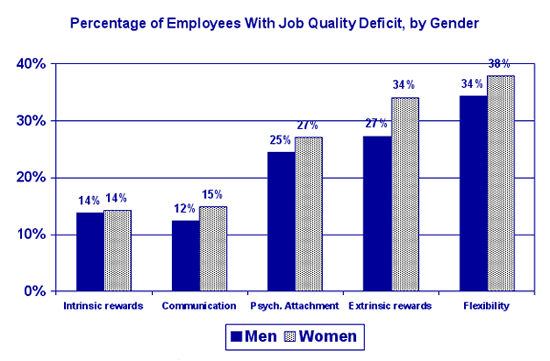
| As the chart below shows, there isn't’t much of a gender gap on four of the five deficit scales – women and men generally report the same job quality deficits. The only exception is with respect to extrinsic rewards – where women report a higher discrepancy than men (34 percent of women versus 27 percent of men). In other words, women report a larger gap between what they value in their job and what they have in their job with respect to extrinsic rewards, such as pay and benefits, than do men. This is perhaps not surprising given the gender gap in earnings between men and women and women’s greater concentration in temporary and part-time jobs, which tend to offer fewer benefits. | ||||||||||||||||||||||||||||||||||||||||||||||||||||||||||||||||||||||||||||||||||||||||||||||||||||||||||||||||||||||||||||||
Women Report Higher Job Quality Deficits On Extrinsic Rewards |
||||||||||||||||||||||||||||||||||||||||||||||||||||||||||||||||||||||||||||||||||||||||||||||||||||||||||||||||||||||||||||||
 |
||||||||||||||||||||||||||||||||||||||||||||||||||||||||||||||||||||||||||||||||||||||||||||||||||||||||||||||||||||||||||||||
Source: CPRN-Ekos Changing Employment Relationships Survey. Paid employees only (n=2118). Reprinted from Hughes, Lowe, and Schellenberg (2003). |
||||||||||||||||||||||||||||||||||||||||||||||||||||||||||||||||||||||||||||||||||||||||||||||||||||||||||||||||||||||||||||||
Job Quality Deficits by Education |
||||||||||||||||||||||||||||||||||||||||||||||||||||||||||||||||||||||||||||||||||||||||||||||||||||||||||||||||||||||||||||||
What influence does education have on job quality deficits for men and women? As with the analysis of job values (hyperlink to job values indicators), gender differences are much larger when educational attainment is considered. As the table below indicates, gender differences on job quality deficits are lower among those with high school or less and highest among university graduates. |
||||||||||||||||||||||||||||||||||||||||||||||||||||||||||||||||||||||||||||||||||||||||||||||||||||||||||||||||||||||||||||||
Gender Differences on Job Quality Deficits Are Most Evident Among University Graduates |
||||||||||||||||||||||||||||||||||||||||||||||||||||||||||||||||||||||||||||||||||||||||||||||||||||||||||||||||||||||||||||||
|
||||||||||||||||||||||||||||||||||||||||||||||||||||||||||||||||||||||||||||||||||||||||||||||||||||||||||||||||||||||||||||||
Source: CPRN-Ekos Changing Employment Relationships Survey. Paid employees only (n=2118). Reprinted from Hughes, Lowe, and Schellenberg (2003). |
||||||||||||||||||||||||||||||||||||||||||||||||||||||||||||||||||||||||||||||||||||||||||||||||||||||||||||||||||||||||||||||
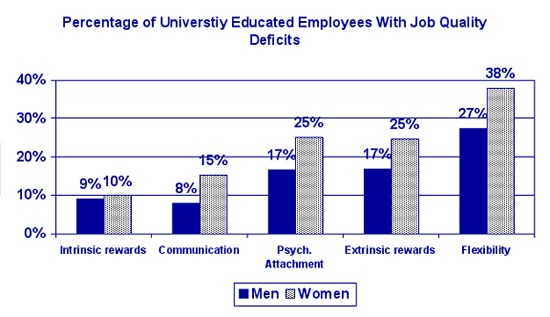
Gender differences in job quality deficits are higher among university-educated employees than amongst those with high school education or less. Among highly-educated workers, the gender gap is greatest on flexibility and work-family balance (10.5 percent), followed by psychological attachment (8.4 percent), extrinsic rewards (7.7 percent), and communication (7.3 percent). The higher deficit rates for women may indicate that female knowledge workers are more likely than their male counterparts to experience frustration in finding employment that meets their expectations. |
||||||||||||||||||||||||||||||||||||||||||||||||||||||||||||||||||||||||||||||||||||||||||||||||||||||||||||||||||||||||||||||
University Educated Women Have Greater Job Quality Deficits |
||||||||||||||||||||||||||||||||||||||||||||||||||||||||||||||||||||||||||||||||||||||||||||||||||||||||||||||||||||||||||||||
 |
||||||||||||||||||||||||||||||||||||||||||||||||||||||||||||||||||||||||||||||||||||||||||||||||||||||||||||||||||||||||||||||
Source: CPRN-Ekos Changing Employment Relationships Survey. Paid employees only (n=2118). Reprinted from Hughes, Lowe, and Schellenberg (2003). |
||||||||||||||||||||||||||||||||||||||||||||||||||||||||||||||||||||||||||||||||||||||||||||||||||||||||||||||||||||||||||||||
Job Quality Deficits by Employment Type |
||||||||||||||||||||||||||||||||||||||||||||||||||||||||||||||||||||||||||||||||||||||||||||||||||||||||||||||||||||||||||||||
As the table below shows, the percentage of women and men who have large job quality deficits is lower among self-employed workers on four of the five job dimensions. The only exception to the self-employed job quality advantage is with regard to extrinsic rewards where self-employed workers report a higher job quality deficit than do paid employees. This is especially true for self-employed women, who have much larger job quality deficits on extrinsic rewards than do self-employed men. This could suggest that self-employed workers are making a trade off between extrinsic rewards and other job quality dimensions. Self-employed workers may be willing to accept lower pay or less access to benefits in order to gain greater flexibility or psychological attachment to their job, or improve work/life balance. |
||||||||||||||||||||||||||||||||||||||||||||||||||||||||||||||||||||||||||||||||||||||||||||||||||||||||||||||||||||||||||||||
Paid Workers Have Higher Job Quality Deficits than Self-Employed Workers Except for Extrinsic Rewards |
||||||||||||||||||||||||||||||||||||||||||||||||||||||||||||||||||||||||||||||||||||||||||||||||||||||||||||||||||||||||||||||
|
||||||||||||||||||||||||||||||||||||||||||||||||||||||||||||||||||||||||||||||||||||||||||||||||||||||||||||||||||||||||||||||
Source: CPRN-Ekos Changing Employment Relationships Survey. Paid employees only (n=2118). Reprinted from Hughes, Lowe, and Schellenberg (2003). |
||||||||||||||||||||||||||||||||||||||||||||||||||||||||||||||||||||||||||||||||||||||||||||||||||||||||||||||||||||||||||||||
Outcomes of Job Quality Deficits |
||||||||||||||||||||||||||||||||||||||||||||||||||||||||||||||||||||||||||||||||||||||||||||||||||||||||||||||||||||||||||||||
Knowing who is more likely to experience job quality deficits and in which areas is important. Equally important is knowing how job quality deficits affect individual and organizational outcomes such as staff turnover and workplace morale. As the table below shows, job quality deficits are positively associated with increased job turnover intentions and a willingness to join a union. The likelihood of having looked for another job within the past year is greater among those employees with job quality deficits. When the number of job quality deficits is added up, we find that persons with deficits in three or more areas are more than twice as likely to have looked for another job as those with no deficits. Similarly, the proportion of non-union employees who would be somewhat or very likely to want to join a union is substantially higher among those with various job quality deficits. |
||||||||||||||||||||||||||||||||||||||||||||||||||||||||||||||||||||||||||||||||||||||||||||||||||||||||||||||||||||||||||||||
Deficits Help Explain Job Turnover Intentions And Willingness to Join a Union |
||||||||||||||||||||||||||||||||||||||||||||||||||||||||||||||||||||||||||||||||||||||||||||||||||||||||||||||||||||||||||||||
|
||||||||||||||||||||||||||||||||||||||||||||||||||||||||||||||||||||||||||||||||||||||||||||||||||||||||||||||||||||||||||||||
Source: CPRN-Ekos Changing Employment Relationships Survey. Paid employees only (n=2118). Reprinted from Hughes, Lowe, and Schellenberg (2003). |
||||||||||||||||||||||||||||||||||||||||||||||||||||||||||||||||||||||||||||||||||||||||||||||||||||||||||||||||||||||||||||||
As shown in the table below, job quality deficits are also strongly associated with perception of workplace morale and absenteeism. Individuals with deficits in the areas of communication and psychological attachment are especially likely to agree or strongly agree that morale is low in their workplace. At the same time, those with three or more deficits are more than three times as likely to say morale is low in their workplace as employees with no job quality deficits. Likewise, job quality deficits are associated with higher absenteeism in the workplace. |
||||||||||||||||||||||||||||||||||||||||||||||||||||||||||||||||||||||||||||||||||||||||||||||||||||||||||||||||||||||||||||||
Deficits are Associated with Low Workplace Morale and Higher Absenteeism |
||||||||||||||||||||||||||||||||||||||||||||||||||||||||||||||||||||||||||||||||||||||||||||||||||||||||||||||||||||||||||||||
|
||||||||||||||||||||||||||||||||||||||||||||||||||||||||||||||||||||||||||||||||||||||||||||||||||||||||||||||||||||||||||||||
Source: CPRN-Ekos Changing Employment Relationships Survey. Paid employees only (n=2118). Reprinted from Hughes, Lowe, and Schellenberg (2003). |
||||||||||||||||||||||||||||||||||||||||||||||||||||||||||||||||||||||||||||||||||||||||||||||||||||||||||||||||||||||||||||||
The outcomes of job quality deficits are fairly similar for men and women, with two exceptions. As the tables above indicate, the number of job quality deficits has a greater impact on men in terms of their likelihood to have looked for another job and their willingness to join a union. On the other hand, there is little difference between men and women in terms of the impact of job quality deficits on perceptions of workplace morale and absenteeism. |
||||||||||||||||||||||||||||||||||||||||||||||||||||||||||||||||||||||||||||||||||||||||||||||||||||||||||||||||||||||||||||||
Additional Charts and Information |