-corpo2.jpg)

Indicateurs de qualité des emplois » Security
<< Retour à la liste de l’ensemble des indicateurs
Temporary Employment |
||||||||||||
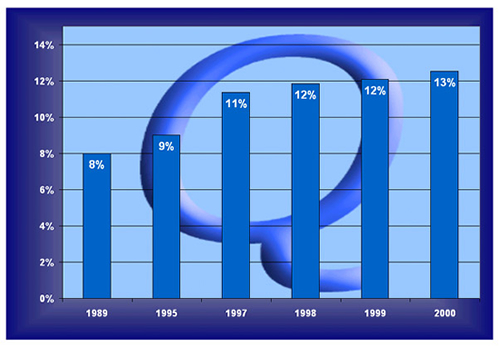
For most Canadians, knowing that they will still have a job in six weeks or six months is important for their economic security. Yet continuous employment is more elusive than it used to be. Today, 13 percent of all employees - one in eight - indicate that they work in a temporary job (a job with a specified end date), up from 8 percent in 1989. More than 1.5 million Canadians are currently employed in temporary jobs. That’s about the same number of people that are employed in the entire province of Alberta! |
||||||||||||
Temporary Employment: One in Eight Now Work a Temp Job |
||||||||||||
|
||||||||||||
Source: CPRN - EKOS Changing Employment Relationships Survey (2000). |
||||||||||||
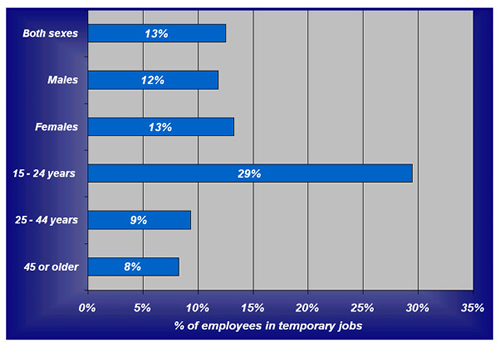
Temporary employment is most prevalent among young people, many of whom are students working in casual jobs after school or on weekends. While a fair number of young people may choose temporary work, the majority do not. Two thirds (65 percent) of those under 25 say they’d prefer permanent work. |
||||||||||||
By Age |
||||||||||||
Temporary Employment: Young People Most Frequently Work Temp Jobs |
||||||||||||
 |
||||||||||||
Source: CPRN - EKOS Changing Employment Relationships Survey (2000). |
||||||||||||
Temporary employment is most prevalent among young people, many of whom are students working in casual jobs after school or on weekends. While a fair number of young people may choose temporary work, the majority do not. Two thirds (65 percent) of those under 25 say they’d prefer permanent work. |
||||||||||||
By Industry |
||||||||||||
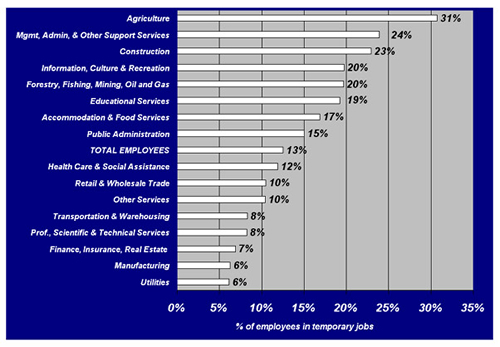
Temporary Employment: Most Common in Agriculture, Least Common in Manufacturing Utilities |
||||||||||||
 |
||||||||||||
Source: CPRN - EKOS Changing Employment Relationships Survey (2000). |
||||||||||||
Temporary employment has long been prevalent in industries such as agriculture and construction where work cycles are seasonal or tied to specific projects. But temporary employment is also common in many knowledge sectors of the economy. For example, 24 percent of employees in management and administrative services are employed on a temporary basis, as are 19 per cent of those in educational services and 15 per cent of those in public administration. |
||||||||||||
By Region
|
||||||||||||
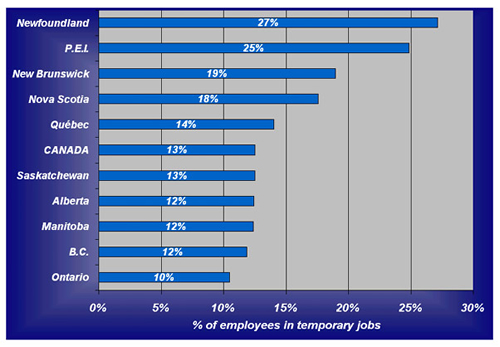
Temporary Employment: Most Common in Eastern Provinces |
||||||||||||
 |
||||||||||||
Source: CPRN - EKOS Changing Employment Relationships Survey (2000). |
||||||||||||
By Outcomes |
||||||||||||
Temporary Employment: Temp Workers Less Likely to Agree |
||||||||||||
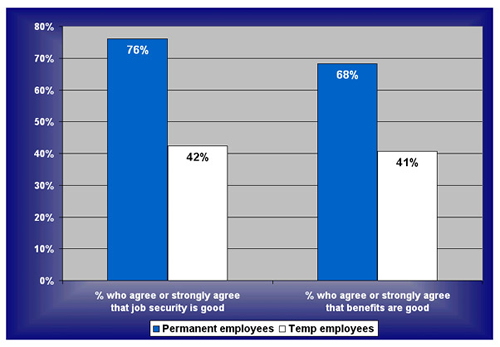 |
||||||||||||
Source: CPRN - EKOS Changing Employment Relationships Survey (2000). |
||||||||||||
The Expectations of Temporary Workers |
||||||||||||
|
||||||||||||
Source: CPRN - EKOS Changing Employment Relationships Survey (2000). |
||||||||||||
The preference for permanent work raises questions about whether temporary positions are stepping-stones to more secure employment or dead-end traps. Temporary workers are much more likely to feel their temporary job will be renewed rather than lead to a permanent position. |
Additional Charts and Information |