-corpo2.jpg)

Indicateurs de qualité des emplois » Pay and Benefits
<< Retour à la liste de l’ensemble des indicateurs
Satisfaction with Pay |
Receiving satisfactory pay and benefits are important factors in promoting employee well-being. Indeed, compensation is often regarded as a very important human resource issue by many managers. |
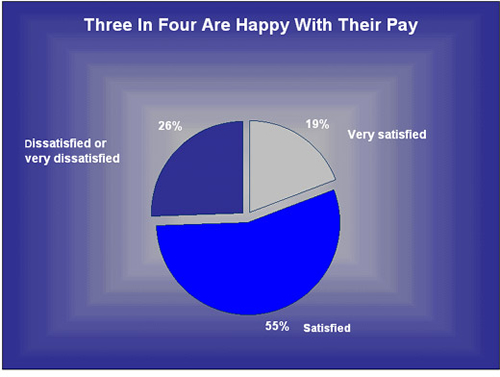
Three In Four Are Happy With Their Pay |
|
Source: CPRN - EKOS Changing Employment Relationships Survey (2000). |
As the above chart suggests, most of those surveyed indicated that they were content with the pay and benefits they received (74 percent), but one in four were not (26 percent). The significant number of Canadians who express dissatisfaction with their pay should be cause for concern among employers. Studies have found that perceived employee satisfaction with their level of compensation can have an important effect on the behaviour of employees. Those who are unhappy with their level of pay have been found to exhibit lower levels of job commitment, often have less faith in management, are more likely to seek work elsewhere, and will more often be tardy or absent or absent from work. |
By Province |
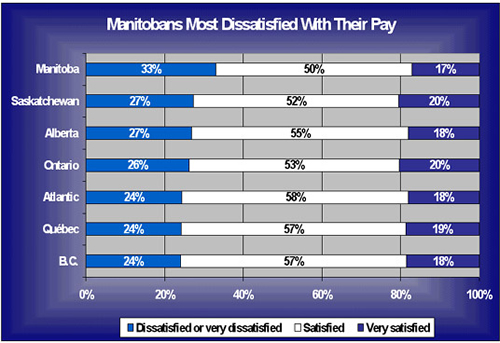
Manitobans Most Dissatisfied With Their Pay |
 |
Source: CPRN - EKOS Changing Employment Relationships Survey (2000). |
As the above chart suggests, the extent to which employees are satisfied with their pay is generally consistent across provinces, save a couple. While dissatisfaction with pay was expressed by about one in four of those surveyed in the majority of provinces (ranging from 24 to 27 percent), a full third of those from Manitoba expressed discontent (33 percent). The highest levels of satisfaction were found in Ontario (20 percent) and Saskatchewan (20 percent), though they were not substantially higher than the other provinces. |
By Industry |
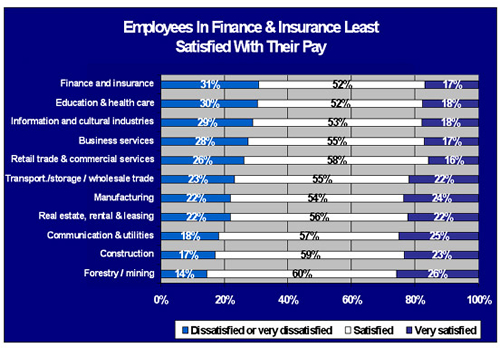
Employees In Finance & Insurance Least Satisfied With Their Pay |
 |
Source: CPRN - EKOS Changing Employment Relationships Survey (2000). |
There also exists significant differences between various occupations. Those employed in finance and insurance, and in education and health were among the most likely to be dissatisfied (31 and 30 percent respectively) and least likely to express satisfaction (17 and 18 percent respectively) with their remuneration. Conversely, those employed in the fields of construction, and forestry or mining were least dissatisfied (17 and 15 percent respectively) and among the most satisfied (24 and 26 percent respectively) with their rate of pay. |
Additional Charts and Information |